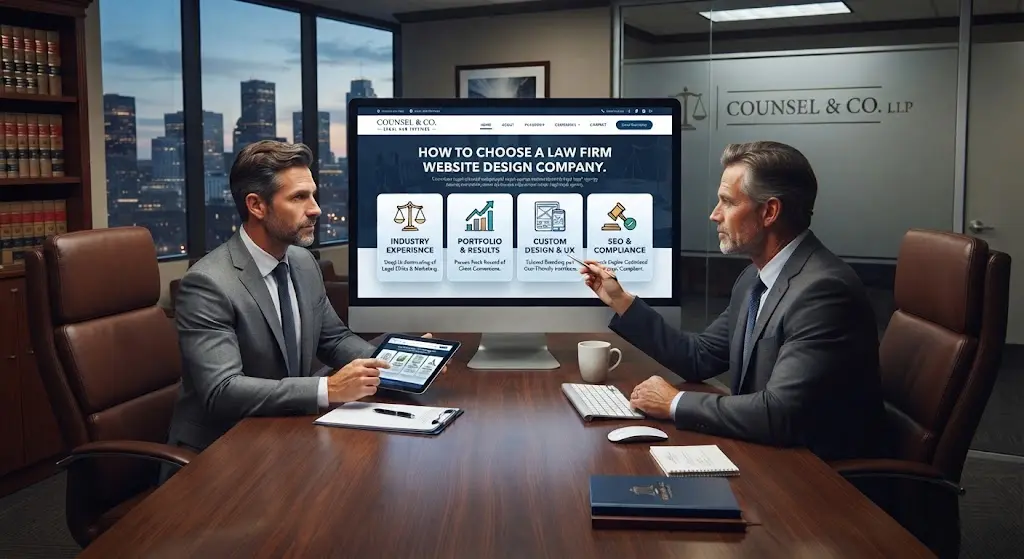

Trust is the single most important thing an attorney website has to establish before a visitor will pick up the phone. Good law firm website design covers the full picture; this guide zooms in specifically on the twelve concrete elements that build — or quietly undermine — trust on the page.
1. Real Attorney Photography
A genuine, professional photo of each attorney outperforms stock imagery every time. Visitors want to know who will actually handle their case, and a real face builds a connection stock photography cannot replicate. Even a simple, well-lit headshot against a clean background beats an elaborate stock image every time, since authenticity is the actual driver of trust here, not production value.
2. Client Testimonials, Handled Correctly
Specific, detailed testimonials — not vague “great lawyer!” quotes — carry real weight. Always check your state bar’s specific rules on testimonials and required disclaimers before publishing them.
3. Case Results, With Required Disclaimers
Past settlement or verdict figures build credibility fast, but nearly every state requires a clear disclaimer that past results do not guarantee future outcomes. Skipping this disclaimer is both a compliance risk and, ironically, can make results look less credible to a savvy visitor.
4. Bar Association and Professional Badges
State bar membership badges, board certifications, and relevant professional association logos are small visual cues that carry outsized trust weight, especially for a first-time visitor unfamiliar with your firm. Placing these near the footer or on the About page, rather than burying them in a single credentials list, keeps them visible without cluttering the primary content.
5. Years of Experience and Founding Date
“Serving clients since [year]” or “25+ years of experience” gives a visitor a quick, credible anchor point, particularly for a legal decision where longevity signals stability and competence.
6. Media Mentions and Press Logos
If your firm has been quoted or featured by local news or legal publications, displaying those logos (with permission) functions as third-party validation — someone else already vetted your credibility.
7. Awards and Recognitions
Super Lawyers, Best Lawyers, and similar recognitions carry real trust weight for legal clients specifically, who often actively research these credentials before choosing an attorney.
8. Clear, Accessible Contact Information
A visible phone number, physical office address, and simple contact form — not hidden behind multiple clicks — signal a real, accountable business rather than something that feels anonymous or hard to reach.
9. Genuinely Complete Attorney Bios
Education, bar admissions, notable case types, and a personal touch beyond a bare-bones resume list help a visitor feel they know the person who would represent them, not just a name on a page.
10. Visible Security Indicators
The SSL padlock in the browser bar is table stakes, but for firms handling sensitive intake information, a brief note about how contact form data is handled can add another layer of visible trust, particularly for privacy-conscious visitors.
11. A Clean, Consistent Design System
Inconsistent fonts, mismatched button styles, or a visibly outdated template all quietly signal neglect — and by extension, raise doubt about how carefully your firm handles other details, including a client’s case.
12. Fast Load Times
A slow site subtly erodes trust before a visitor even reads your content — speed itself functions as a trust signal, communicating competence and care in the same way a prompt reply to an email does.
How These Elements Work Together: A Realistic Example
Consider two personal injury firms with similar case results. Firm A’s homepage shows a stock photo of a generic handshake, no visible bar credentials, and a contact form buried at the bottom of the page. Firm B shows a real photo of the lead attorney, a state bar badge, two detailed client testimonials near the top of the page, and a click-to-call button visible in the header. Both firms may have equally strong legal track records, but Firm B converts a meaningfully higher percentage of visitors, simply because the page itself did more work building trust before the visitor ever had to make a judgment call about picking up the phone.
Which Elements Matter Most for Which Practice Area
Case results and awards carry the most weight for personal injury and criminal defense, where outcomes are the central concern. Bio depth and testimonials matter more for family law and estate planning, where the relationship with the specific attorney is central. No firm needs to maximize every element equally — prioritize based on what your specific clients are actually evaluating.
Implementing These Without a Full Redesign
Most of these twelve elements can be added incrementally to an existing site without a full rebuild — swapping stock photos for real ones, adding a testimonials section, or placing bar badges in the footer are all relatively contained changes. The elements that do require more structural work are ones tied to page architecture itself, like reorganizing navigation for accessibility or restructuring how case results are presented site-wide with consistent disclaimers. Start with the easy wins first; they often produce a noticeable trust improvement well before any larger redesign work is warranted.
Seeing These Elements in Practice
The clearest way to understand how these elements come together is to see real examples. We break down 20 law firm websites that do this well in 20 law firm website examples worth copying.
Common Questions About Trust Signals on Attorney Websites
Is it possible to have too many trust signals on one page?
Yes — cramming badges, testimonials, and awards onto a single page can look cluttered and actually undermine the polish that builds trust in the first place. Spread them thoughtfully across the site rather than front-loading everything onto the homepage.
What if my firm is new and does not have testimonials or awards yet?
Lean into the elements you do have — clear contact information, real photography, thorough bios, and fast performance. Trust signals accumulate over time; a new firm should focus hardest on the elements it can control immediately.
Do these elements matter differently for mobile vs desktop visitors?
Somewhat — on mobile, prioritize the elements visible without scrolling: real photography in the header area and a visible click-to-call button. Testimonials and award badges can sit further down the page without losing their impact.
Should trust signals be repeated on every page, or just the homepage?
A visitor may land on any page from a search result, not just the homepage, so key trust signals — a phone number, a credential badge — should appear consistently sitewide, not only on the homepage.
Bottom Line
None of these twelve elements individually wins a client — together, they compound into the overall impression that decides whether a visitor calls. See how we build these into every project →
Attorney Website Designers builds trust-focused law firm websites exclusively for attorneys across the USA. Book a free 15-minute call to see our design process.